
In this series, SMB members and candidates share the stories of their vocations. Br. Lovemore Japi comes from Mutoko, in the Archdiocese of Harare, Zimbabwe, and is the first Zimbabwean member of the Bethlehem Mission Society. He made his temporary promise on 21 April 2025 at Driefontein and is currently in his second year of philosophy at Arrupe Jesuit University in Harare.
Roots in Mutoko
To begin, could you introduce yourself to our readers and tell us a little about your family background and where you come from?
My name is Lovemore Japi, and I am a member of the Bethlehem Mission Society (SMB) with temporary promise, the first Zimbabwean to join the Society. I made my temporary promise on 21 April 2025 at the SMB Regional House in Driefontein, Zimbabwe, in the presence of the Very Rev. Fr. Ludovic Nobel, the Superior General of the SMB. I am currently in my second year of philosophy at Arrupe Jesuit University in Harare, Zimbabwe, whose philosophy programme is affiliated with the Pontifical Gregorian University in Rome.
I come from Mutoko, in the Archdiocese of Harare, Zimbabwe. I grew up in a humble Christian family that instilled in me the values of faith, hard work, respect and service. I am the fifth-born in a family of six boys. My family, parish community, friends and relatives played an important role in nurturing my faith and shaping the person I am today. I recognise that my vocation did not develop in isolation; it grew within a community of people whose faith, encouragement and example helped me discover the importance of serving God and others. I remain deeply grateful to them for the part they have played in my journey.
Looking back, when did you first sense that God might be calling you to the priesthood and missionary life?
My desire to become a priest began when I was young, although I did not fully understand it at the time. As I grew in faith through prayer, participation in the sacraments and involvement in the life of the Church, I gradually came to recognise that God might be inviting me to dedicate my life entirely to His service.
One experience that profoundly shaped my sense of vocation was growing up in a parish where, because of a shortage of priests, our outstations used to celebrate Holy Mass only three times a year. When I was 14, I was taught to lead prayer services in the absence of a priest. At 17, I became a catechist because I was literate and able to grasp the teachings of the faith quickly. These responsibilities brought me closer to the life of the Church and helped me recognise the importance of serving communities that have limited access to pastoral ministry.
My journey has not always been easy, but its challenges have deepened my conviction and taught me to trust in God’s providence. I have come to understand that vocation is not simply about having the desire to serve God; it is also about allowing oneself to be formed, corrected and guided. Although I could pursue other opportunities, including meaningful professional employment, I find deep consolation in missionary life and in the freedom to serve God’s people through poverty, obedience and celibacy.
A Home in the Bethlehem Mission Society
What attracted you specifically to the Bethlehem Mission Society, and what inspired you to choose SMB over other congregations and societies?
What attracted me most to the Bethlehem Mission Society was its international missionary spirit and its spirituality rooted in Bethlehem, where Christ entered the world in humility, simplicity and hiddenness. I was particularly drawn to the Society’s willingness to go wherever the Gospel is most needed, regardless of culture, language or nationality.
The motto One Mission, Four Continents resonated deeply with my desire to serve the universal Church. I wanted to belong to a missionary family that embraces cultural diversity while remaining united in Christ. Bethlehem spirituality also speaks to me because it reminds me that God does not always work through what is great or impressive in the eyes of the world. He often works through simplicity, faithfulness and the quiet offering of one’s life. I see in this spirituality a call to become a missionary who is available, humble and willing to serve wherever God leads through the Society.
Can you describe your journey into the Society? Were there any significant moments or people who helped you discern your vocation?
My vocational journey has been one of faith, perseverance and trust in God’s providence. It has taught me that discerning a vocation is not simply a matter of deciding what one wants to do with one’s life; it involves learning to listen to God, accepting formation and allowing oneself to grow through the guidance of others.
I am especially grateful to Mother Lydia Fabian and her community, the Brothers and Sisters of Jesus of Nazareth, who accommodated us while the Society was working towards its revival and the establishment of its formation programme. Their example helped instil in me a spirit of prayer and hard work. Fr. Mathew Madziva, the Novice Master, further nurtured these qualities and accompanied me until I made my temporary promise. Since then, Fr. Talent and Fr. Joseph have continued to guide and shape me.
I am also grateful to the priests, religious, formators, family members and friends who have encouraged me and prayed for me. Their support has reminded me that a vocation is personal, but it is never lived alone. Through the people God has placed in my life, I have learned the importance of remaining open to guidance, persevering through uncertainty and trusting that formation is a continuing journey.
“A vocation is personal, but it is never lived alone.”
The Temporary Promise
You made your temporary promise in 2025. What did that day mean to you personally, and how has it transformed your relationship with God and the Society?
It was one of the happiest and most meaningful days of my life. By making my temporary promise and committing myself to poverty, obedience and celibacy, I publicly entrusted my life to God and accepted the responsibility of participating in the mission of the Bethlehem Mission Society.
For me, the day was not the conclusion of a journey, but the beginning of a deeper commitment. It reminded me that a vocation is both a gift to be received with gratitude and a responsibility to be lived faithfully. Since then, I have become more conscious of the need to grow in humility, prayerfulness, availability and generosity. My temporary promise has also deepened my sense of belonging to the Society, reminding me that my personal response to God is lived within a community and in service of a mission greater than myself.
For readers who may not be familiar with religious life, what does the temporary promise signify in the life of an SMB missionary?
The temporary promise is a public commitment to live the evangelical counsels of poverty, obedience and celibacy according to the Constitutions and way of life of the Bethlehem Mission Society.
It is also an important period of formation and discernment. During this time, a missionary continues to grow spiritually, intellectually, pastorally and humanly while preparing for the possibility of making the definitive promise. The temporary promise is therefore both a privilege and a responsibility: a privilege because it allows one to respond more deeply to God’s call, and a responsibility because that response must be expressed in daily fidelity, community life and missionary service. It is not simply a promise made on one occasion; it is a commitment that must gradually take shape in one’s attitudes, choices and relationships.
How would you describe your experience as a member with temporary promise, and also as the first Zimbabwean member of the Bethlehem Mission Society so far?
It has been a great blessing and an honour, but I also recognise the responsibility that comes with it. Being the first Zimbabwean member of the Bethlehem Mission Society is not something I regard as a personal achievement. Rather, I receive it as a gift from God and an invitation to live my vocation faithfully.
I see myself as a bridge between the Society and my country, connecting my Zimbabwean roots with the wider missionary life of the universal Church. I hope that my presence in the Society will encourage other young Zimbabweans to become more aware of the missionary vocation and to consider how God might be calling them to serve.
“I see myself as a bridge between the Society and my country, connecting my Zimbabwean roots with the wider missionary life of the universal Church.”
At the same time, I remain a missionary in formation, learning through prayer, study, community life and pastoral experience. I do not see myself as having arrived, but as someone who is still being shaped for the mission. This awareness keeps me grounded in humility and reminds me that the most important thing is not being the first, but remaining faithful to the One who has called me.
Community, Prayer and Study
Community life is an essential part of religious and missionary formation. What has living in an SMB international community taught you about fraternity, humility and service?
Living in an international community has taught me that differences in culture, language and tradition need not divide us. They can become opportunities to learn from one another and discover the richness of belonging to a missionary family that extends beyond national boundaries.
I have learned that fraternity requires more than living under the same roof or sharing the same religious commitments. It requires listening, patience, forgiveness, respect and a willingness to make room for others. Community life also challenges me to recognise my own limitations and to understand that I, too, need the understanding and support of my brothers. It reminds me that authentic missionary life begins at home: before being sent to people in distant places, I must learn to love, respect and serve the people with whom I live each day.
How do prayer, the Eucharist and community life sustain you in your missionary vocation?
Prayer, the Eucharist and community life are essential sources of strength in my vocation. Prayer keeps me rooted in Christ, the source and centre of my calling. It gives me the opportunity to listen, to examine my life and to renew my willingness to follow God’s will, even when the path ahead is not entirely clear.
The Eucharist nourishes me spiritually and reminds me that missionary life is fundamentally about self-giving love. In Christ, I encounter the One who gives Himself for the salvation of the world and invites me to make my own life an offering for others. Community life, in turn, provides fraternity, encouragement and accountability. Together, these three dimensions help me remain grounded, especially when I encounter difficulties or become discouraged. They remind me that I do not sustain my vocation by my own strength alone, but through God’s grace and the support of the community.
You are currently a second-year philosophy student. In what ways has the study of philosophy enriched your understanding of faith, humanity and missionary service?
The study of philosophy has taught me to seek truth sincerely, examine assumptions and think critically about fundamental questions concerning human existence. It has also deepened my understanding of the human person, human dignity, freedom and the search for meaning. These questions are particularly important in missionary life because people come from different backgrounds, hold different beliefs and seek answers to the profound questions of life in different ways.
Philosophy is teaching me that missionary service requires more than speaking about the faith; it also requires listening carefully, understanding people’s questions and engaging them with reason, respect and compassion. It helps me appreciate the relationship between faith and reason and prepares me to encounter people whose beliefs or experiences may differ from my own. I hope to use what I am learning to proclaim the Gospel thoughtfully, respect the dignity of every person and accompany people as they search for truth, hope and meaning.
One Mission, Four Continents
The Bethlehem Mission Society is known for its international missionary spirit. What does the motto One Mission, Four Continents mean to you personally?
To me, One Mission, Four Continents expresses the universality of the Church and the conviction that Christ’s mission knows no geographical or cultural boundaries. Although we may come from different countries, speak different languages and carry different traditions, we are united in the same call to proclaim the Gospel and serve God’s people.
The motto reminds me that missionary identity is not limited to one’s country of origin. I am deeply rooted in Zimbabwe, but I am also part of a wider missionary family whose service extends wherever the Church needs us. This calls me to develop an open heart, a willingness to learn from other cultures and the freedom to be sent beyond familiar surroundings. For me, international mission is not simply about travelling to another continent; it is about making myself available to serve people whose lives and experiences may be very different from my own.
As a Zimbabwean preparing to become an international missionary, how do you view the call to serve people from different cultures, languages and traditions?
I regard this call as both a gift and a responsibility. My upbringing in Zimbabwe has taught me the importance of community, respect for elders, solidarity and faith lived out in simplicity. These values are part of what I bring to missionary life, but I also recognise that I have much to learn from the people and cultures I may encounter.
For me, cross-cultural mission begins with listening. Before trying to teach or lead, a missionary must be willing to understand the people, their history, their joys, their struggles and their hopes. The Gospel does not erase cultures; rather, it purifies and elevates what is good in them. I believe that every culture can become a place of encounter with God, and that missionary service involves both sharing the gifts of faith and humbly receiving the gifts that others have to offer. I hope to approach every community with respect, openness and a genuine desire to learn and serve.
Missionary life often requires sacrifice and availability. What motivates you to embrace this calling with joy?
What motivates me most is love: love for Christ, who first gave Himself completely for us, and love for the people who are searching for hope, meaning and the Good News of the Gospel.
Missionary life requires sacrifice. It may involve leaving home, adapting to unfamiliar cultures, accepting difficult assignments and surrendering personal preferences. Yet I have come to understand that sacrifice does not necessarily mean losing one’s happiness. When one’s life is offered freely in love, sacrifice can become a source of deep meaning and joy. The Eucharist reminds me of this self-giving love each day. I want my availability to arise not merely from a sense of duty, but from gratitude for what I have received from Christ and a desire to share that gift with others.
The Spirit of Bethlehem
What aspects of the spirituality and charism of the Bethlehem Mission Society have touched your heart most deeply?
Two aspects touch me most deeply. The first is the spirituality of Bethlehem, which draws me to contemplate Christ’s humility, simplicity and hiddenness. The Son of God entered the world not through earthly power or prestige, but in the poverty and vulnerability of Bethlehem. This reminds me that God’s work is not always accomplished through great achievements or public recognition. Sometimes it is expressed most profoundly through quiet faithfulness, ordinary duties and a willingness to serve without seeking recognition.
The second is the Society’s international missionary charism, expressed in the motto One Mission, Four Continents. I am moved by the willingness to go to places where the Gospel is most needed, including communities where priests are few. This resonates deeply with my own experience of growing up in outstations that had limited access to Holy Mass. Bethlehem spirituality and the missionary charism together remind me that I am called to be both rooted in Christ and available to His people, especially those who might otherwise be overlooked.
How has your understanding of missionary life evolved since you first entered the Society?
When I first entered the Society, I tended to associate missionary life mainly with travelling to distant places and carrying out many activities. With time, I have come to understand that mission begins much deeper than that. It begins in the heart, in one’s relationship with Christ, and in the way one lives with one’s brothers and responds to the responsibilities of each day.
“It begins in the heart, in one’s relationship with Christ, and in the way one lives with one’s brothers and responds to the responsibilities of each day.”
I have learned that being a missionary is not only about what one does, but also about the kind of person one is becoming. Prayer, study, community life and ordinary duties are not interruptions to the mission; they are part of the formation that prepares one for it. Sometimes the greatest missionary act is to remain faithful in a hidden task, to listen patiently to another person or to continue studying when the results are not immediately visible. This understanding has taught me that missionary availability must be formed in everyday life before it can be expressed fully in the wider world.
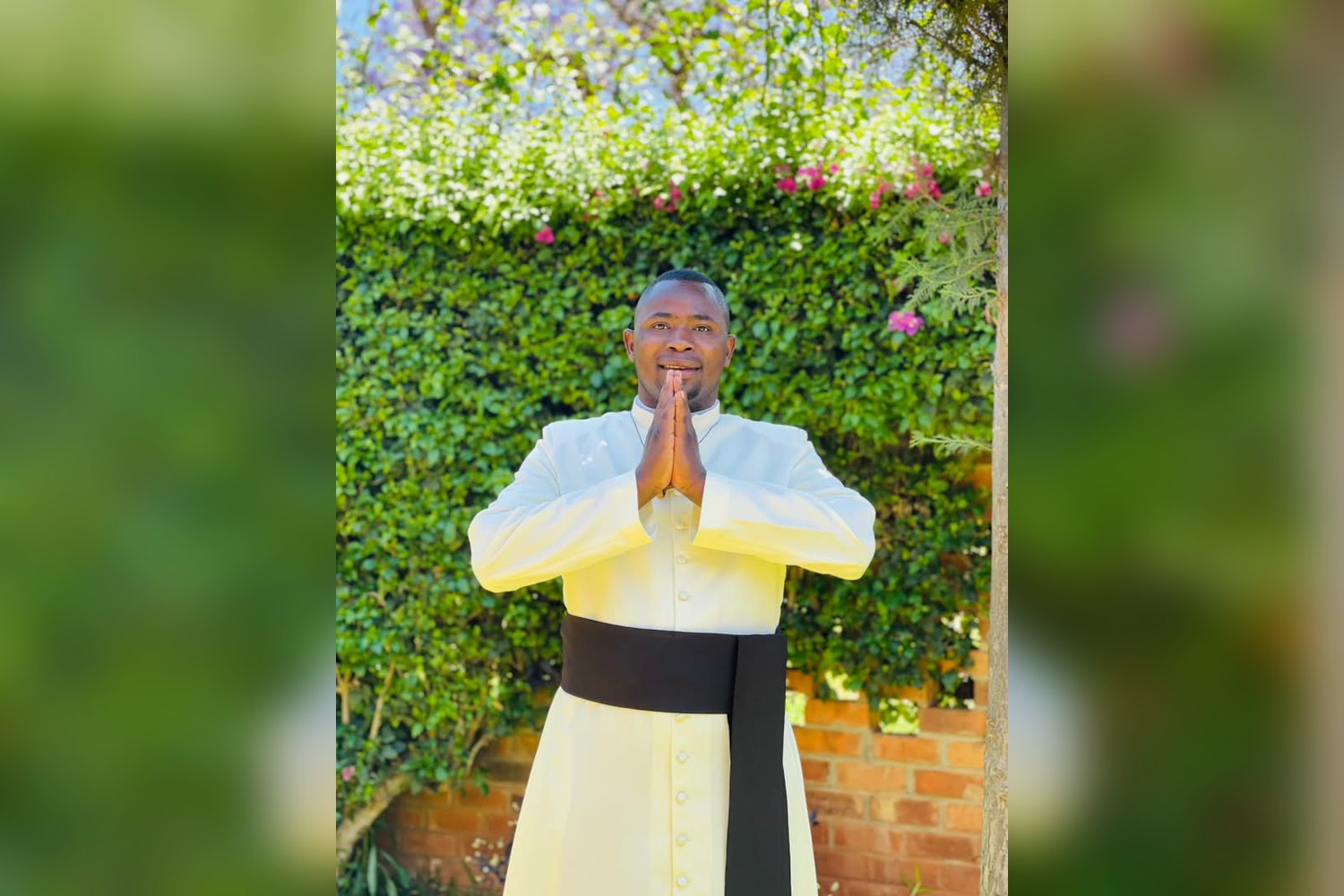
Br. Lovemore Japi.
Missionaries for Today
What qualities do you believe are essential for someone who wishes to become an effective SMB missionary in today’s world?
I believe humility, courage and compassion are essential. Humility enables a missionary to learn from the people he serves rather than assuming that he already has all the answers. Courage gives him the strength to proclaim Christ faithfully, even in situations where the Gospel may be misunderstood or unwelcome. Compassion enables him to recognise the dignity of each person and to respond to human suffering with genuine concern.
I would also emphasise prayerfulness, joy and cultural openness. A missionary must remain rooted in Christ while being willing to encounter people whose experiences, beliefs and traditions differ from his own. Above all, missionary effectiveness cannot be measured only by visible achievements or the number of activities performed. It must also be seen in the authenticity of one’s witness, the quality of one’s relationships and one’s willingness to serve faithfully, even when the fruits of that service are not immediately apparent.
In your opinion, what are some of the greatest challenges facing missionaries today, and how can young missionaries respond to them with hope and courage?
Among the challenges I see are secularism, loneliness, cultural differences and the temptation to become discouraged when results are not immediate. Many people are searching for meaning and belonging, yet some have been wounded by difficult experiences or have become sceptical of religious institutions. Missionaries must therefore learn to engage the world with both conviction and humility.
Young missionaries can respond by living authentically, listening attentively and remaining close to Christ through prayer and the Eucharist. People need more than words; they need witnesses whose lives reflect the love they proclaim. Missionaries must also be willing to understand the questions of contemporary society, use appropriate means of communication and accompany people patiently rather than expecting immediate results. Above all, we must remember that the mission belongs to God. Our responsibility is to serve faithfully and trust Him with the fruits of our efforts.
Hopes and a Word to the Young
As you continue your formation, what are your hopes and aspirations for your future ministry within the Bethlehem Mission Society?
My hope is simple: to remain faithful to God’s call and to become a missionary priest who is close to the people, especially young people and communities that rarely have the opportunity to celebrate Holy Mass with a priest. Coming from an area where access to the Eucharist was limited, I understand how precious the presence of a priest can be to a community.
I hope to serve wherever the Society sends me, whether in Zimbabwe, elsewhere in Africa or beyond. I also hope to encourage young people to discover their gifts and discern how God might be calling them to serve the Church. My philosophical studies are helping me reflect more deeply on God, the human person and the search for meaning. I pray that this formation, together with continued spiritual and pastoral growth, will prepare me to accompany people with wisdom, humility and compassion. Ultimately, my greatest aspiration is not simply to achieve particular goals, but to become a faithful instrument of God’s love wherever I am sent.
Many young people today are searching for meaning and purpose. What would you say to someone who feels that God may be calling them to religious or missionary life but is afraid to respond?
I would say: do not be afraid to listen. Fear and uncertainty are normal when we face a decision that may shape the whole direction of our lives. Discerning a vocation does not mean that we must have every answer from the beginning. It means being willing to bring our questions, hopes and fears before God and to discover, step by step, what He may be asking of us.
Take time for prayer, speak with a trusted priest or religious, and allow yourself to be accompanied through the discernment process. Visit a religious community if possible and learn about its life and mission. Do not feel that you must be perfect before responding to God’s call; formation is itself a journey of growth. The important thing is to remain honest, open and willing to take the next step. A vocation is not about escaping the world, but about discovering how best to love God and serve His people.
What advice would you give to young men who are discerning a vocation to join the Bethlehem Mission Society?
My advice would be simple: come and see. Come with an open heart, a willingness to learn and a genuine desire to discover whether the spirituality and mission of the Bethlehem Mission Society correspond to the call you are experiencing.
Be prepared to grow in prayer, community life and missionary commitment. Be willing to embrace simplicity, encounter different cultures and allow yourself to be formed through both the joys and challenges of religious life. Do not approach the journey with the expectation that you already know everything or that every step will be easy. Instead, learn to trust God’s timing and to discern patiently with the help of those accompanying you. If you desire to love Christ, serve people and make yourself available for the mission of the Church, have the courage to explore this possibility. The first step is not to have every answer, but to be willing to listen.
Gift, Bridge and Joy
What message would you like to share with the members, missionaries, benefactors and friends of the Bethlehem Mission Society around the world?
I would like to express my heartfelt gratitude to all the members, missionaries, benefactors and friends of the Bethlehem Mission Society. Thank you for your prayers, sacrifices, encouragement and material support, which help sustain the Society’s mission and enable young men like me to respond to God’s call.
Your contribution is not separate from the mission; it is part of it. Every prayer offered, every sacrifice made and every act of generosity helps create the conditions in which the Gospel can be proclaimed and lives can be touched. As a member still in formation, I am especially conscious of how much we depend on the support and faithfulness of others. I therefore ask you to continue walking with us in prayer and solidarity. Together, we share in the one mission of Christ across the four continents. May God reward your generosity and bless you abundantly.
Finally, if you could describe your missionary vocation in just a few words, what would they be, and why?
I would describe my missionary vocation in three words: Gift, Bridge and Joy.
Gift, because my vocation is not something I have earned or achieved by my own strength; it is a grace from God, which I receive with gratitude and a sense of responsibility. Bridge, because I see myself as a link between my Zimbabwean roots and the universal Church, bringing the gifts of my culture while remaining open to the richness of other peoples and traditions. Joy, because despite the challenges and sacrifices of missionary life, serving Christ gives me a profound sense of meaning and happiness. These three words remind me that my vocation is a gift to be cherished, a mission to be lived and a joy to be shared.
“These three words remind me that my vocation is a gift to be cherished, a mission to be lived and a joy to be shared.”
As we conclude this interview, could you share a Scripture passage or a saint who inspires your missionary journey, and explain why this continues to guide your vocation?
The Scripture passage that guides me is John 15:16: “You did not choose me, but I chose you and appointed you that you should go and bear fruit and that your fruit should abide.” These words remind me that my vocation begins with God’s initiative. Before I chose to respond to Him, He was already calling me. This gives me confidence in moments of uncertainty and reminds me that my responsibility is to remain united to Christ, faithfully respond to His call and allow Him to work through my life. The lasting fruit of mission does not depend on my efforts alone, but on remaining rooted in Him.
The saint who inspires me is St. Francis Xavier, whose missionary zeal, availability and trust in divine providence continue to encourage me. His life reminds me that love for Christ must lead to a willingness to cross boundaries, encounter other peoples and proclaim the Gospel with generosity. His example challenges me to renew my own response to God’s call each day, trusting that wherever He sends me, He will also give me the grace to serve.
