The History of the Origins
The origins of the Bethlehem Mission Society go back to the French priest Pierre-Marie Barral. In 1895, he founded the “Ecole apostolique de Bethléem” (Apostolic School of Bethlehem) in Meggen, Switzerland, which was moved to Immensee in 1896. It became the Gymnasium Bethlehem, Immensee (Bethlehem grammar school/high school). In the same year, the first issue of the multilingual monthly magazine “Bethlehem” appeared, which was published under the name “Wendekreis” from 1972 until 2017.
While the institute originally aimed to train the sons of poor families for missionary service in Europe’s abandoned parishes, missionary activities in Asia, Africa and Latin America were developed over time. Circles of friends were formed in Austria, Italy, France, Great Britain, Portugal, and the USA. Difficulties in the work, which was financed through stamp trading, dishonest fundraising, and loans, led to a reorganization as the Bethlehem Mission House in 1907 by the later first Superior General Pietro Bondolfi.
On 30th May, 1921, the papal decree establishing the “Swiss Seminary for Foreign Missions” was issued in Rome. Pietro Bondolfi was the first Superior General. From 1934, the association was called the “Society for Foreign Missions of Bethlehem in Switzerland” (Societas Missionaria de Bethlehem in Helvetia). For short, it is known as the Bethlehem Mission Society (SMB).

Students of the philosophy class from Pietro Bondolfi (front, centre) around 1910 (SMB archive, FDC 115/22)
Most of the new members of the Society were recruited from the Gymnasium Bethlehem (Bethlehem grammar school) run for this purpose in Immensee. This included the “Progymnasium” (lower Forms) in Rebstein (1926–73) and Fribourg (1938–72). In 1995, the grammar school/high school was transferred to a private foundation under the name of “Gymnasium Immensee”.
The training of candidates for the priesthood began in 1922 at the seminary in Wolhusen, was then transferred to the “Bruder-Klausen-Seminar” (Seminary of St. Nicholas of Flüe) in Schöneck (Emmetten) in 1932, and has taken place at the Faculty of Theology in Lucerne since 1969.
In 1925, the first Brother missionaries were admitted into the SMB to work in administration, schools, businesses, and agriculture. The Brothers, as well as the candidates for the priesthood and the priests, pledge to live according to the principles of the SMB.
Research into missions and religious studies became a focal point in 1945 with the founding of the “Neue Zeitschrift für Missionswissenschaft” (NZM – New Journal for Missiology), which was replaced by the “Forum Mission” yearbook in 2005.
 Further informations
The First Mission : China
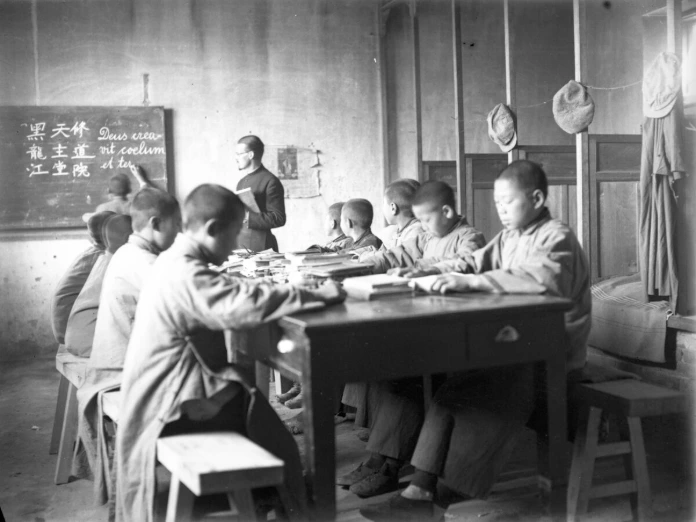
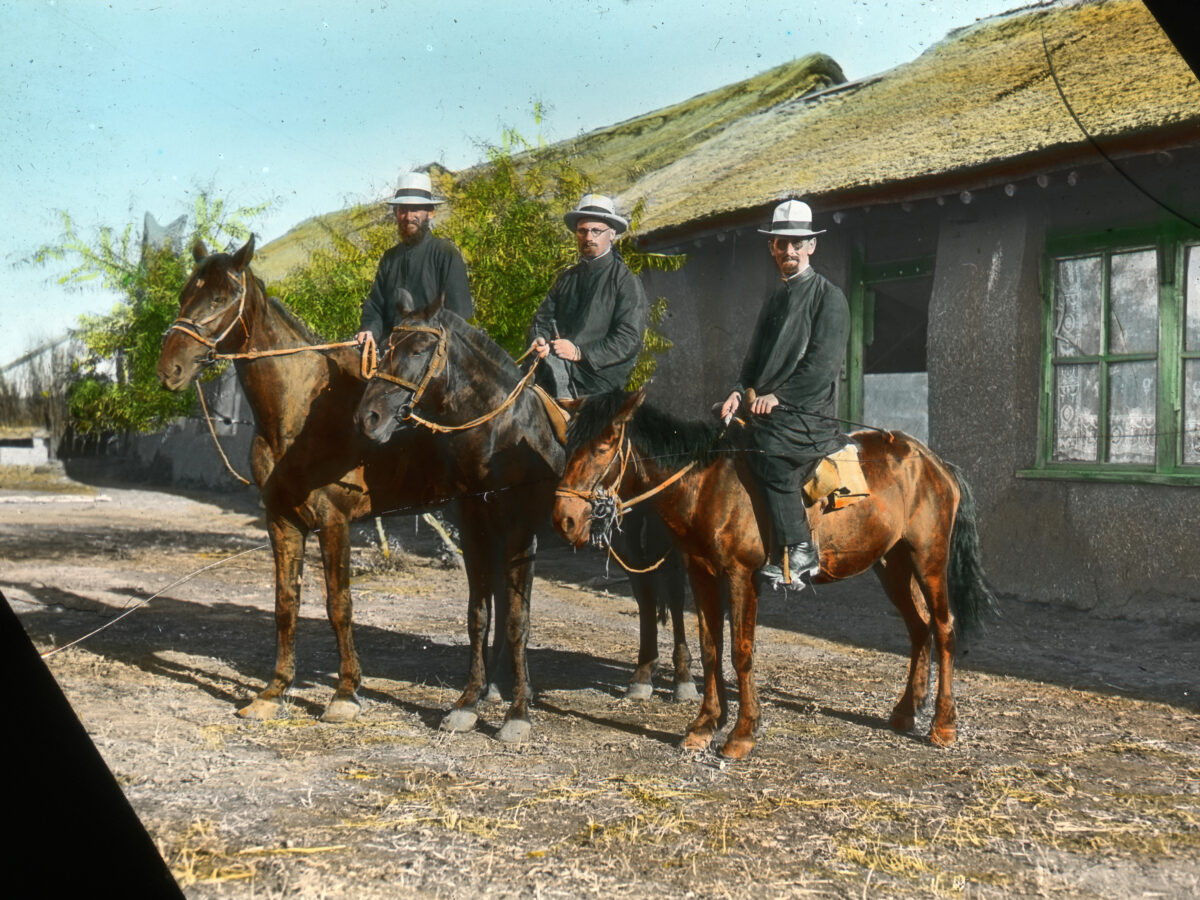
Already in 1924 the first three missionaries travelled to China where they were first with the Steyler Missionaries in Yanzhou, South-Shandong to learn the Chinese language and culture. In July 1925 the Apostolic Delegate, Celso Costantini, gave them their own mission area – the Apostolic Prefecture Qiqihar in the far north of China.
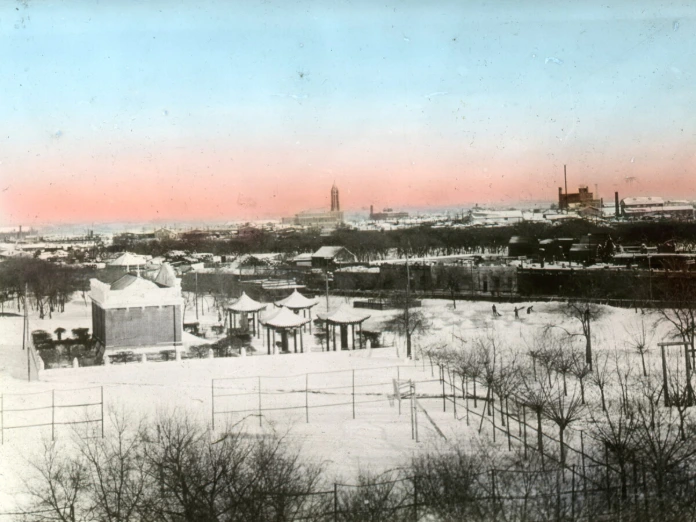
On the 19th. March 1926 Paul Hugentobler und Eugen Imhof arrived in Qiqihar, while Gustav Schnetzler took over the village of Changfatun. The SMB devoted themselves to the establishment of the local Christian community and together with the Ingenbohl Sisters to the building up of medical care and school education. By 1940 there were 42 SMB priests active in China. In 1953 most of them were expelled with the last leaving China in 1954.
Further Informations
A Missionary Commitment on Four Continents
The mission in Zimbabwe was initiated in 1938. The territory entrusted to our community was twice the size of Switzerland. There, too, there was no shortage of work to be done: building schools, hospitals, churches, roads, and dams. But the two great particularities of the Zimbabwe mission were, on the one hand, the creation of an African sacred art under the initiative of Fr. Jean Gröber, and, on the other hand, the creation of African sacred song thanks to the genius of Fr. Joseph Lenherr.
Six Bethlehem missionaries are still working in Zimbabwe.
Expelled from China, several of our confreres then went to Taiwan, where they proclaimed the Word of God to members of the eight Malay peoples who lived on the island before the arrival of the Chinese. With them also came nearly two million Chinese fleeing the communist regime. Among them were many Christians who today, together with the Indigenous peoples, form the majority of the country’s parish members. Four of our confreres are still present there.
The mission in Japan proved very difficult. The confreres left with great enthusiasm. Some experienced missionaries from other congregations predicted that the time had come for the Japanese people to convert to Christianity. But this did not happen. The dozen missions opened in the Iwate district each gathered only a few dozen Christians. One of our missionaries in Japan, Fr. Charles Freuler, had become an architect before studying theology. He therefore provided the various mission stations with beautiful churches and also built many other buildings beyond Iwate: churches, convents, and schools.
The commitment of our missionaries in Colombia also deserves to be highlighted. They took charge of communities lost in the mountains. A few years later, they were joined by lay people, whose numbers grew steadily. Three of our confreres continue the mission today in this country, which for many years was marked by civil war.
In the 1970s, a missionary commitment also began in Haiti. It was particularly important for French-speaking Switzerland, since Fr. Georges Conus was active there for nearly 20 years. He first served the Christians of the parish of Bombardopolis, then those of the parish of Chénot. He continues to support the latter.
Another African country received special attention from the Bethlehem Missionaries: Zambia. This country has been cruelly affected by the scourge of AIDS. It has tens of thousands of orphans, whose parents died because they had no access to medication for this disease. Fr. Ernest Wildi, supported by a group of lay people, established a large orphanage in Lusaka.
To conclude this brief overview, it should also be recalled that several confreres have been, or still are, active in a number of other countries, such as Bolivia, Ecuador, and Peru in Latin America; Kenya, Mozambique, Tanzania, Chad, and Zambia in Africa; and the Philippines in Asia.
